
I’ve just finished reading Invisible Women by Caroline Criado Perez, and it feels especially relevant with International Women’s Day coming up.
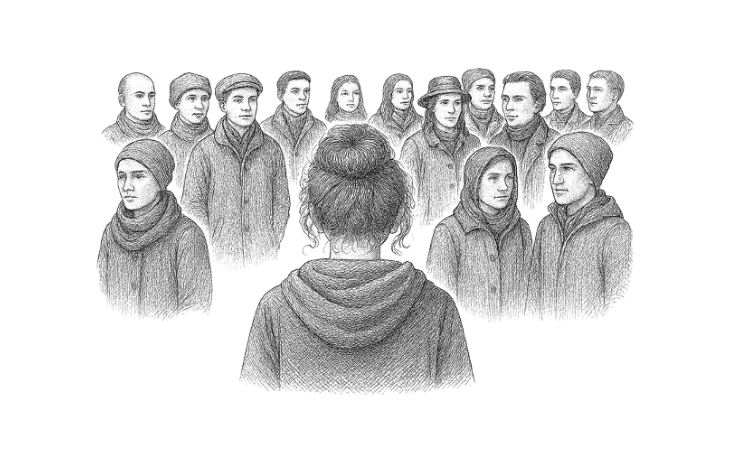
The book challenges the assumption that things are simply ‘the way they are’ and highlights a poignant truth – much of our world is in fact designed and built around a default that excludes half the population.
Perez’s argument is solidly grounded in data. Office temperatures calibrated to male metabolic rates. Car safety tests built around the average male body. Drug dosages tested primarily on men, with real-world consequences for women. None of it malicious, just systems built around a norm.
It highlights four things to think about in our day jobs – not necessarily new ideas but brought into much sharper focus.
Notice who’s missing before you start
Crash test dummies are built for the average male body…until you realise it leaves women far more at risk in a real accident. The book makes it seem that the problem often isn’t intentional, but oversight. Women simply weren’t included in the data. In research, it’s easy to recruit the ‘obvious’ segment. The engaged users. The category buyers. The confident talkers. But who didn’t make the list? Who doesn’t see themselves in the category at all today? Who might your product/service be relevant to in the future? If they’re not represented from the outset, their needs won’t shape the outcome and there’s a risk of short-term thinking.
Small design choices shape big outcomes
An office thermostat setting sounds trivial… until you realise it leaves half the room uncomfortable. Research works the same way, based on assumptions or historical knowledge – the wording of questions, response scales, imagery in stimulus and assumptions in screeners. Each is a dial that subtly shapes the answer. All determine what you see, what you learn, or what you miss.
Absence is a finding
What’s missing can be as revealing as what’s present… like decades of banknotes showing only men. We’re trained to read the data in front of us e.g. percentages, themes, quotes. But what about what never surfaced? Who hesitated, held back, or didn’t feel able to say what they meant? Silence isn’t empty. It’s insight.
Context explains behaviour
City snow-clearing prioritises main commuter routes… fine if you measure a standard 9-5pm commute. But women’s journeys often involve multiple stops for chores, childcare, or caregiving, so they’re slower and less direct. Behaviour only makes sense when you account for the messiness of real life: The constraints, the time, safety, social expectations, mental load. Without context, data can mislead, and solutions can miss the real problem.
Perhaps the most meaningful way to mark International Women’s Day is by paying attention to the gaps, blind spots, and assumptions baked into our systems. Because the only exception that should be applied to women is exceptional.
Rachel